What is a Degu?

1. What is a Degu?
The degu (Octodon degus) is a small rodent native to central Chile, where it inhabits the evergreen grasslands and shrub-covered foothills of the Andes. In the wild, degus live in close family groups that build elaborate underground burrow systems. Each member has a role: some collect food, others guard the entrances or care for the young. This cooperative lifestyle makes the degu one of the most social rodents in the world, highly dependent on companionship and group structure.
2. A Look Between Species
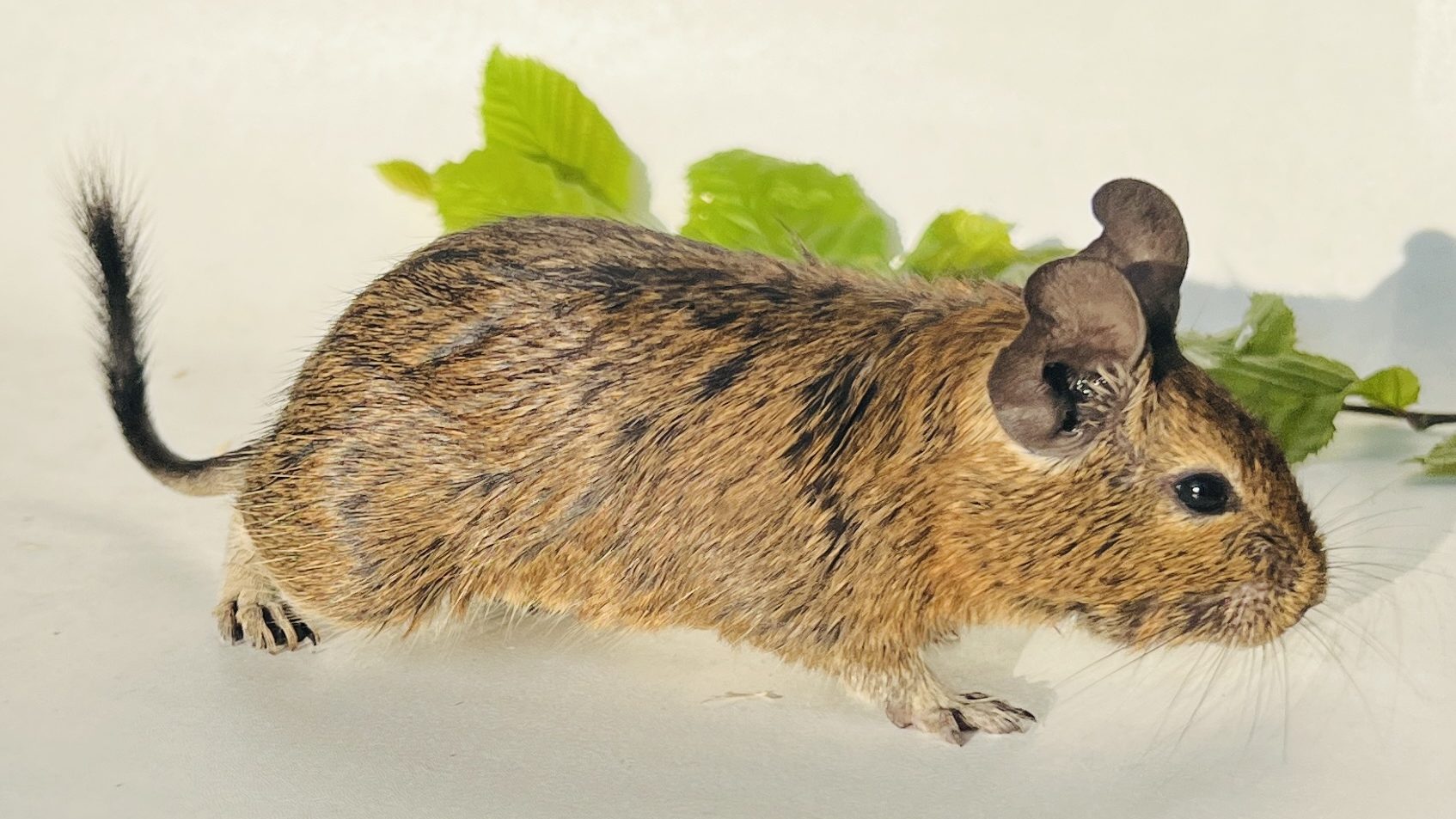
With their sturdy build, black-tipped tail, large eyes and long, expressive whiskers, degus look like something between a guinea pig and a gerbil, yet they are a species of their own. Their fur has a soft, sandy-brown tone with subtle grey or golden highlights, perfectly blending into their natural surroundings. Degus are diurnal, meaning they are most active during the day, which makes them easier to observe and interact with than most nocturnal rodents. Their daily rhythm includes foraging, dust bathing, exploring, and long sessions of mutual grooming behaviours that reveal their intelligence and emotional depth.
3. Social and Intelligent
Curious, energetic and highly communicative, degus use a wide range of vocalisations and gestures to express themselves. They chirp, chatter, squeak and even purr to convey friendship, alarm or excitement. A single degu will quickly become lonely and stressed, so companionship is not optional. They need at least one, but ideally several partners of their own kind. Within a group, they form lifelong bonds and show remarkable cooperation. Watching them interact offers a glimpse into a miniature society where every individual matters.
4. Life with Enrichment
Degus are active and intelligent animals that require plenty of stimulation to stay healthy. In captivity, they need a spacious environment with multiple levels, hiding places, sand for bathing, and a constant supply of branches to gnaw on. Exploring new objects, and sharing playtime with cage mates all keep their minds busy. Without sufficient space or enrichment, they can become bored and develop stereotypical behaviours, so variety is key to their wellbeing.
5. A Specialised Diet
In their natural habitat, degus feed on a wide variety of grasses, herbs, bark and leaves. Their metabolism is adapted to this high-fibre, low-sugar diet. In captivity, they should be offered unlimited hay, a selection of dried herbs, fresh greens, and only a small amount of species-appropriate hardfeed. Sugary treats, including fruit, should always be avoided, as degus are prone to developing diabetes. Providing natural forage encourages healthy chewing, digestion, and tooth wear, which is essential for their constantly growing incisors and molarrs.
6. Charming but Challenging Companions
Because of their strong social instincts and intelligence, degus are fascinating companions but not the easiest pets. They need time, patience and consistent handling to build trust with humans, yet once they do, they show clear recognition and affection. For newcomers, discovering their group dynamics, communication, and gentle curiosity is a true delight. Living with degus means observing a world of cooperation, strong emotions and endless small discoveries. Proof that even tiny creatures can have complex hearts.
Learn more
To truly understand the needs of these remarkable animals, explore the next sections on housing, nutrition, and health, each designed to help you provide your degus with the safe, stimulating and social life they deserve.
 Andean Whispers