🌾 Hay: Always There, But Not the Main Course
Hay is often described as the most important food for degus. That idea is partly true, but not for the reason most people think.
Hay isn’t rich, but it’s reliable
Nutritionally, hay is poor. By the time grass has been cut, dried and stored, most of its vitamins and proteins are gone. It offers little energy, but it remains a safe, fibrous base.
Fresh and dried plants such as leaves, herbs, flowers and stems are what truly nourish degus.
Still, hay deserves a constant place in every enclosure, not for its nutrients but for its stability.
Why degus always need food available
Degus have a fast metabolism and a digestive system that is designed to work continuously.
If they go too long without eating, their gut slows down, which can quickly become dangerous.
Having hay available 24/7 ensures they always have something to chew and keeps their digestion safely in motion.
It also helps you as a caretaker: hay doesn’t spoil, it’s easy to store, and it removes the pressure of having to feed them constantly throughout the day.
What makes good hay
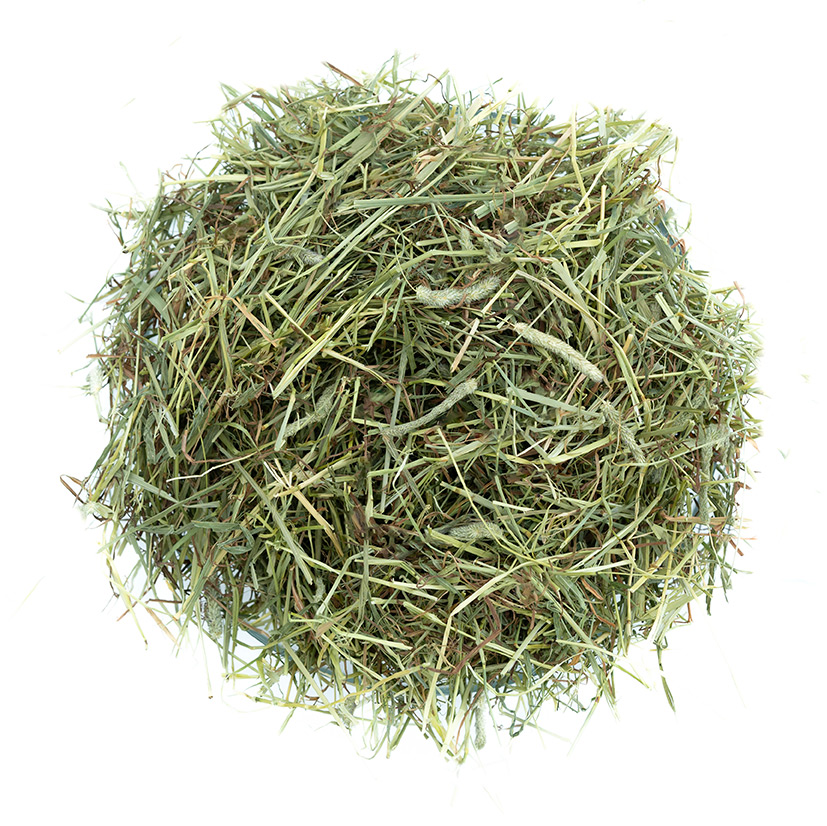
Not all hay is equal. High-quality hay smells fresh and summery, never musty or dusty.
It should have a natural greenish tint, with a mix of grasses, stems, leaves and sometimes flowers.
Avoid yellow, flat or crumbly hay, as it has often lost its aroma and nutrients.
Good hay is also lightly packed, not compressed into dense plastic bricks.
If you have to pull hard and almost bend your nails back to loosen it, that’s a bad sign.
Tightly pressed hay tends to break the fibers, trap moisture and lose its natural scent.
The best hay comes from diverse meadows rather than monoculture grass fields.
Meadow hay from protected areas often contains a natural mix of plants that offer both texture and mild variety.
You can also rotate types:
Timothy hay is coarse, fibrous and excellent for dental wear.
Meadow hay tends to be softer and more fragrant.
Mountain meadow or herbal hay brings variety and enrichment.
Reliable brands for consistent quality include BunnyNature, Oxbow, and Heu-Kaufen, though locally sourced hay from small farms can also be excellent when stored properly.
Regularly switching between different kinds of good-quality hay keeps your degus curious and ensures they never lose interest in foraging.
Safety first: avoid hay balls and wire racks
Metal or wire hay racks may look convenient, but they can be extremely dangerous.
Degus can get their heads or legs stuck between the bars, leading to fractures or even strangulation.
Open wire balls and feeders pose the same risks, and tails can easily be stripped of skin (degloved) if caught.
The safest way to offer hay is loose — in bowls, in tunnels, or gently stuffed into hanging metal buckets or zinc flower pots, where degus can pull it out freely without risk.
Fresh grass does the real work
When it comes to dental health, fresh grass remains the real key. Its softer fibers and natural moisture help degus grind their molars evenly.
Hay is a bit drier and rougher, but still far better for teeth than pellets or seeds.
In short
Hay isn’t the star of the diet, it’s the safety net.
It keeps digestion active, prevents hunger gaps, and gives you peace of mind knowing your degus always have something safe to eat.
 Andean Whispers
Plaats een reactie